
On the 17th of December 2025, researchers, practitioners, and policy stakeholders from across the UK health and data ecosystem gathered at the Wellcome Trust, London for the first in a series of national workshops exploring how High-Performance Computing (HPC) can more effectively support healthcare research.
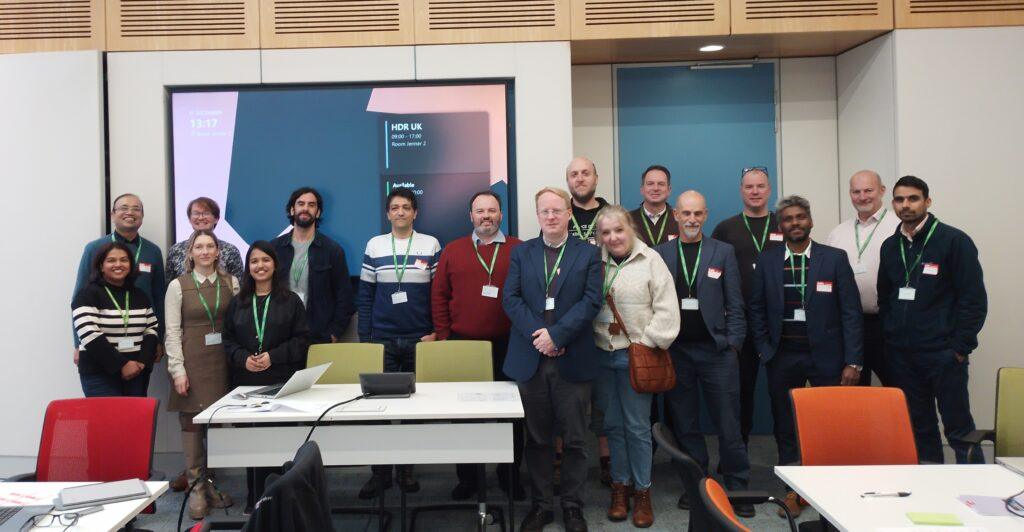
The workshop forms part of the UKRI-funded project, “Enhancing HPC Adoption Through User-Centred Design: A Roadmap for Inclusive Innovation in Environment, Health, and the Built Environment”, led by UWE Bristol. The project aims to develop an inclusive, user-centred roadmap for future HPC infrastructure, ensuring that advanced computational capabilities are accessible, trustworthy, and fit for purpose across diverse research communities.
Understanding Barriers and Enablers in Health HPC
The full-day workshop focused on understanding both the technical and socio-organisational challenges associated with using HPC for sensitive health data. Through expert talks and facilitated table discussions, participants explored three core themes:
- Barriers to HPC and Secure Data Environments
- Trust, Privacy, and Governance
- Future Vision and a National Roadmap for HPC
The day opened with a project introduction from the UWE research team, setting out the project’s ambition to place user experience, equity, and governance at the centre of future HPC design.
Expert Perspectives and Collaborative Discussion
Participants heard from three guest speakers, each bringing complementary perspectives on the evolving HPC landscape:
- Martin O’Reilly addressed practical and systemic barriers to HPC and data access, highlighting challenges around application processes, timelines, and post-access technical constraints.
- Jim Smith explored issues of privacy, trust, and governance, prompting discussion on how researchers balance patient confidentiality with the need for collaborative and scalable analysis.
- David Meredith reflected on the past, present, and future of federated computing, examining how federation can enable secure collaboration while raising new questions around governance and accountability.
These contributions fed directly into structured table discussions, where participants considered questions such as:
- What prevents researchers from using HPC effectively for sensitive health data?
- How do governance models influence trust in federated HPC infrastructures?
- What would an “ideal” federated HPC system for NHS health research look like?
- How can equitable access be ensured for smaller NHS trusts and under-represented research areas?
A Diverse and Engaged Community
The workshop brought together participants from a wide range of organisations, including UWE Bristol, NHS England, Manchester University NHS Foundation Trust, Canon Medical, The Alan Turing Institute, University of Oxford, University College London, Imperial College London, Queen Mary University London, Medical Research Council, and other universities across England and Wales.
This diversity of perspectives enriched discussions, ensuring that insights reflected the realities of working across academia, healthcare delivery, industry, and national research infrastructure.
Towards a National HPC Roadmap
Key themes emerging from the discussions included the need for:
Simplified and transparent access processes to HPC and secure data environments
Clear, trusted governance frameworks for federated infrastructures
Improved training, onboarding, and user support
Infrastructure designs that account for organisational scale, capacity, and regional variation
These insights will directly inform the project’s ongoing work to co-develop a national, inclusive roadmap for HPC infrastructure.
What’s Next?
Building on the success of this first workshop, the next event will take place on the 4th March 2026 at Imperial College in London, focusing on the environmental science research community. Together, these workshops will ensure that the future of UK HPC infrastructure is shaped by those who use it — and those currently excluded from it. For CATE and UWE Bristol, this work reinforces a commitment to responsible innovation, interdisciplinary collaboration, and inclusive digital research infrastructure.
If you would like to attend our future workshops, have any questions, or need further information, please contact the project lead Dr Tariq Umar at tariq.umar@uwe.ac.uk.