
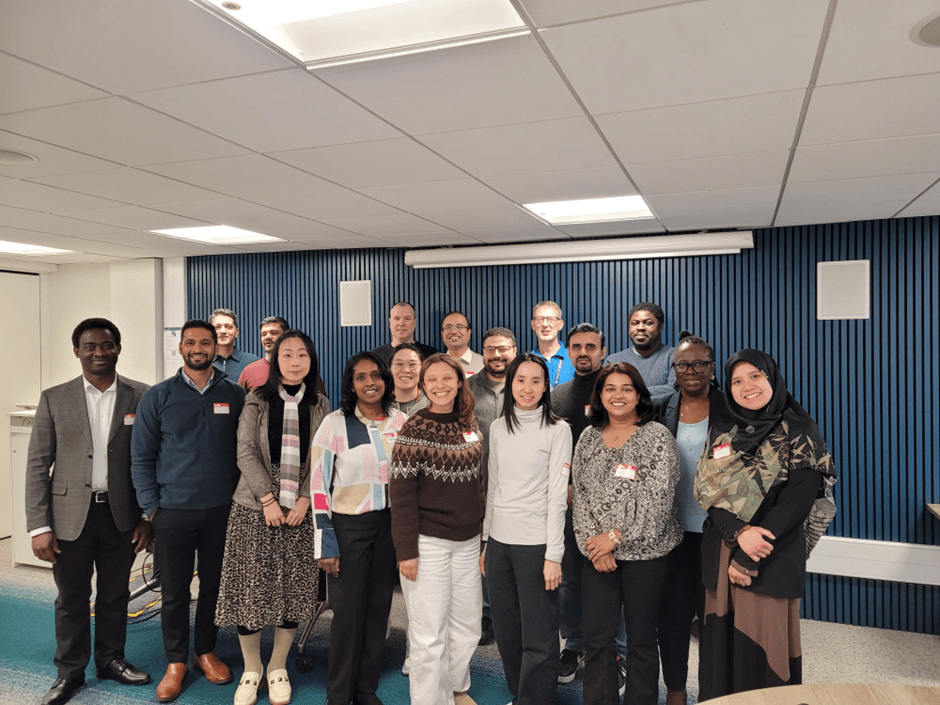
High-performance computing (HPC) is transforming research and innovation across disciplines, yet adoption in the built environment remains uneven. To better understand barriers and opportunities, the University of the West of England (UWE Bristol) convened a multi-stakeholder workshop on Exploring the Role of High-Performance Computing (HPC) in the Built Environment on 30 January 2026 in Birmingham. The event brought together researchers, industry practitioners, and infrastructure specialists to inform a user-centred roadmap for inclusive HPC adoption.
The workshop forms part of the project “Enhancing HPC adoption through user-centred design: A roadmap for inclusive innovation in environment, health, and the built environment”, contributing evidence to the UK National Federated Compute Services (NFCS) roadmap. Through expert talks and facilitated discussions, participants explored three key themes: barriers to HPC adoption, trust and governance, and future federation models.
Barriers Beyond Technology
Participants highlighted that challenges in the built environment extend well beyond compute capacity. Complex access processes, limited awareness, software licensing constraints, and misalignment with established tools such as BIM, CAD, and GIS were recurrent concerns. Many organisations also operate in time-pressured project environments where lengthy onboarding or data migration is impractical.
Trust, Data Sensitivity, and Commercial Risk
Unlike many academic domains, built environment research frequently involves commercially sensitive or critical infrastructure data. Workshop discussions emphasised the need to protect intellectual property, manage collaboration agreements, and ensure clarity over data ownership and access rights. In some cases, organisations prefer data to remain physically within their premises, reflecting strong concerns about sovereignty and compliance.
Federation with Local Control
A consistent theme was the desire for federated HPC models that enable collaboration while preserving local control. Participants expressed interest in architectures where data can remain within trusted organisational environments but still be analysed at scale through secure federation layers. Governance transparency, contractual clarity, and auditable access controls were identified as key enablers of trust.
Skills, Interoperability, and Inclusive Access
The workshop also revealed significant skills and interoperability gaps. Many built environment professionals rely on desktop-based workflows that do not translate easily to HPC environments. Participants emphasised the importance of tailored training, domain-specific toolchains, and Research Software Engineer (RSE) support. Ensuring equitable access for SMEs, local authorities, and smaller consultancies was viewed as essential for widening adoption.
Informing the NFCS Roadmap
Insights from the workshop reinforce findings emerging across health and environmental sciences engagement activities: HPC adoption depends as much on usability, governance, and trust as on technical capability. These cross-sector perspectives will directly inform recommendations for the NFCS roadmap, particularly around onboarding pathways, federated governance models, and inclusive infrastructure design.
As HPC becomes central to digital twins, infrastructure resilience, and net-zero modelling, enabling the built environment community to engage confidently with national compute infrastructure is critical. Continued dialogue between researchers, industry, and infrastructure providers will be essential to ensure HPC systems evolve to meet real-world workflows and data realities.
Upcoming Engagement Opportunities
The project will shortly deliver further engagement activities, including a workshop with the environmental sciences community, a hands-on HPC training event and facility visit, and a cross-sector focus group discussion to refine roadmap recommendations.
If you are interested in attending or contributing to any of these activities, please contact the project lead Dr Tariq Umar at tariq.umar@uwe.ac.uk